Developing a Circular Goat Value Chain Ecosystem
Organising goat-based livelihoods through stronger community institutions and market linkages
Turning smallholder goat rearing into a more productive and sustainable livelihood
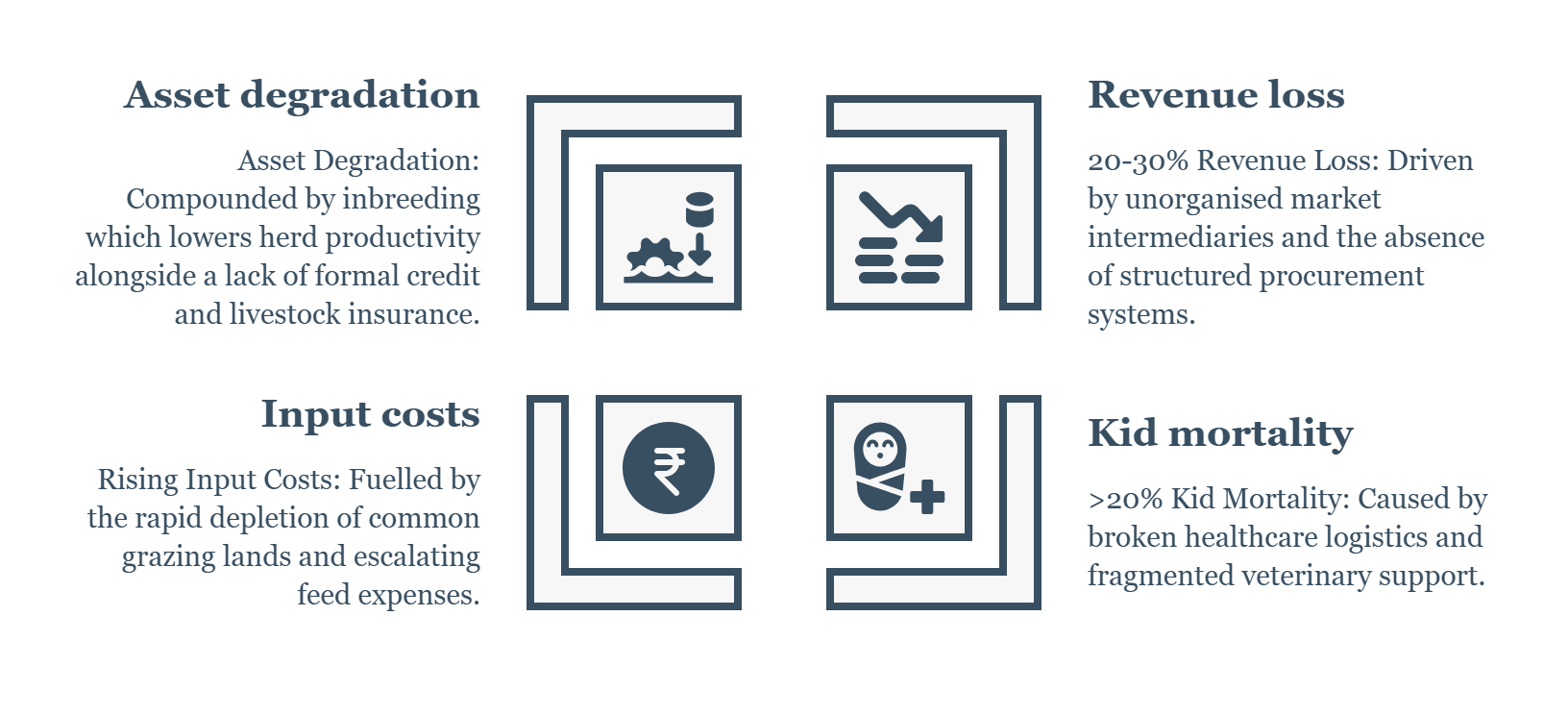
Smallholder goat rearing in India represents a highly lucrative but fragmented “slumbering economy.” While goats serve as critical liquid assets for landless and marginal farmers, the sector is currently crippled by severe systemic inefficiencies:
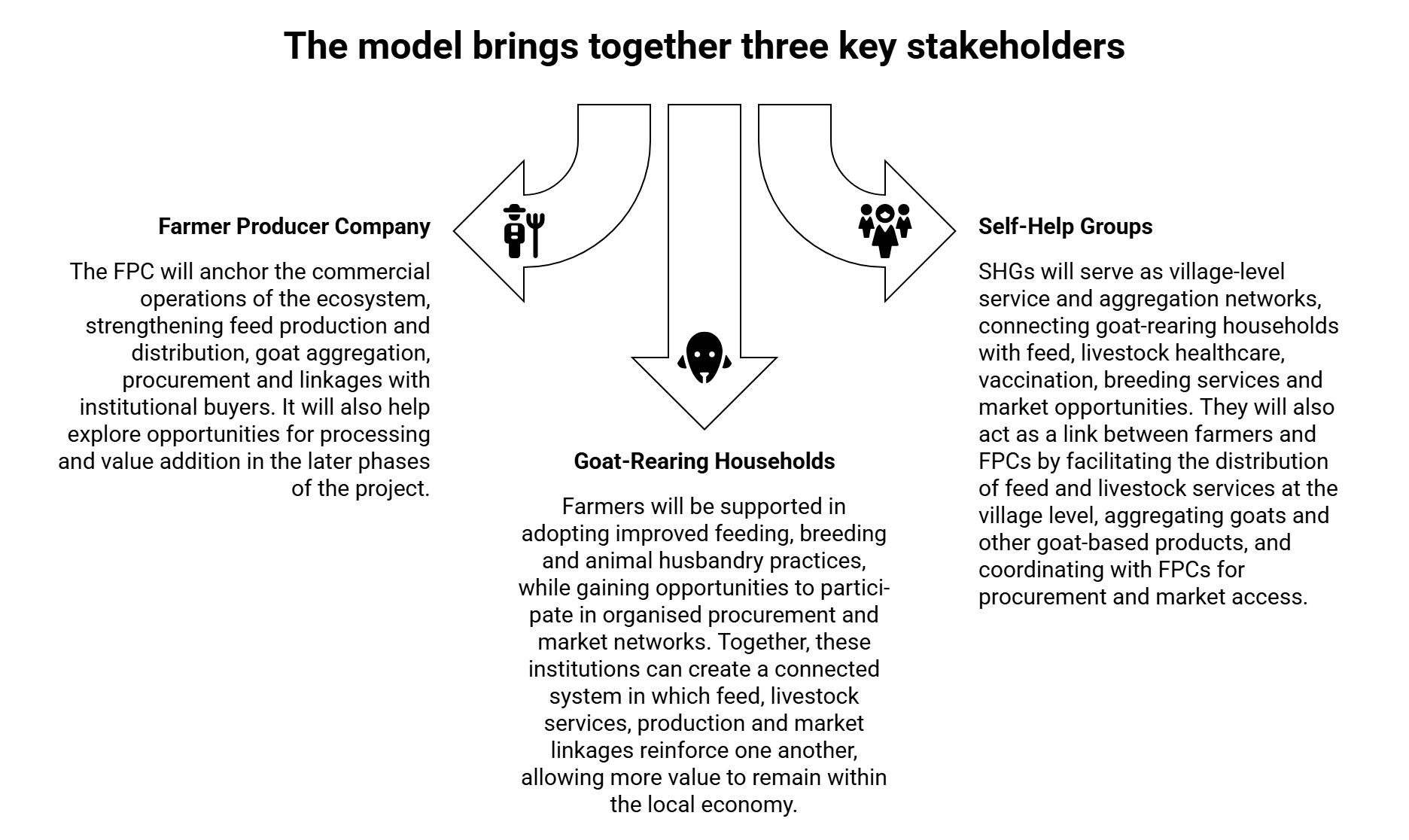
CDFI has launched the Developing Circular Goat Value Chain Ecosystem initiative in Buldhana, Maharashtra, to address these challenges by bringing together existing Community Based Organisations like Farmer Producer Companies (FPCs), Self-Help Groups (SHGs) and goat-rearing households. The initiative seeks to transform a fragmented livelihood activity into an organised, community-led value chain, connecting farmers with better feed, livestock services, aggregation and organised markets.
Building an Integrated Goat Livelihood Ecosystem
At the heart of the initiative is a community-led model that connects different stakeholders across the goat value chain, building on institutions and infrastructure that already exist. CDFI is working with an existing FPC that has established capabilities in producing scientifically formulated goat feed, alongside the local SHG network, to explore an integrated ecosystem for goat-rearing households.
From Fragmented Production to Collective Growth

The initiative focuses on addressing key gaps across the goat value chain:
- Affordable and Balanced Nutrition: Strengthening access to scientifically formulated goat feed using locally available agricultural by-products, while exploring ways to reduce feeding costs.
- Better Livestock Health: Building community-level systems for preventive healthcare, vaccination, deworming and timely veterinary support through connecting goat-rearing households with relevant government livestock health schemes and services.
- Improved Herd Productivity: Promoting better breeding practices and scientific livestock management to improve animal health, growth and productivity.
- Organised Procurement and Market Access: Connecting farmers through SHG-led aggregation and FPC-led procurement, with an emphasis on transparent, weight-based transactions and direct institutional market linkages.
- Developing Processing and Value-Addition Infrastructure: Establishing a roadmap for FPC-led processing units for goat milk and milk-based products. The project will assess market opportunities, infrastructure and investment requirements, and potential funding through government schemes and institutional finance. It will also explore the aggregation and productive utilisation of goat manure, creating additional value and income opportunities across the ecosystem.
Building the Foundation for a Stronger Goat Economy
CDFI initiated the project in Buldhana on 19 October 2026, beginning with a two-month ecosystem assessment to understand the existing goat livelihood landscape and identify opportunities for building an integrated value chain.
The ongoing assessment brings together household-level research, market analysis and institutional assessments to establish a clear picture of how goat-based livelihoods currently function and where interventions can create the greatest value.
CDFI is currently working across four key areas:
- Understanding Goat-Rearing Households: Assessing household livelihoods, herd composition, feeding practices, animal health, production costs, income patterns and existing livestock marketing practices to understand the economics of goat rearing.
- Mapping Markets and Value Chains: Examining existing procurement channels, market actors, trading practices and price discovery mechanisms to identify opportunities for collective aggregation, better market access and improved price realisation.
- Assessing Community Institutions: Working with community based organisations to understand their organisational capacity, infrastructure, business operations and readiness to take up roles within the proposed ecosystem.
- Identifying Opportunities for Integration: Assessing how existing feed production, livestock services, community networks and market infrastructure can be connected to create a commercially viable and locally managed goat value chain.
The findings will guide the next stage of the initiative, shaping the institutional model, service delivery arrangements and market linkages required to take the ecosystem forward.
Towards Sustainable and Higher-Income Goat Livelihoods
The initiative seeks to build a model that creates value at every stage of the goat economy, while strengthening the institutions that connect farmers to essential services and markets.
- Higher and More Predictable Household Incomes: Improve farmers' income opportunities through better livestock productivity, efficient input management and stronger market access.
- Healthier and More Productive Livestock: Strengthen access to balanced nutrition, preventive healthcare and improved breeding practices to reduce livestock losses and enhance herd productivity.
- Stronger Community Institutions: Enable FPCs and SHGs to become sustainable economic institutions delivering essential services and business opportunities to goat-rearing households.
- Better Market Participation: Create organised procurement, aggregation and market linkages that improve transparency, bargaining capacity and price realisation for farmers.
- A Replicable Rural Livelihood Model: Build a commercially viable, community-led goat value chain that can be adapted and scaled across other regions with similar livelihood opportunities.
Through this initiative, CDFI aims to demonstrate how existing rural institutions, local production systems and organised markets can come together to build more resilient and sustainable livestock-based livelihoods.
Project Details
- Region: Buldhana, Maharashtra
- Start Date: 19 October 2026
- Status: Ongoing
- Beneficiaries: Smallholder goat-rearing households, SHGs and FPCs