
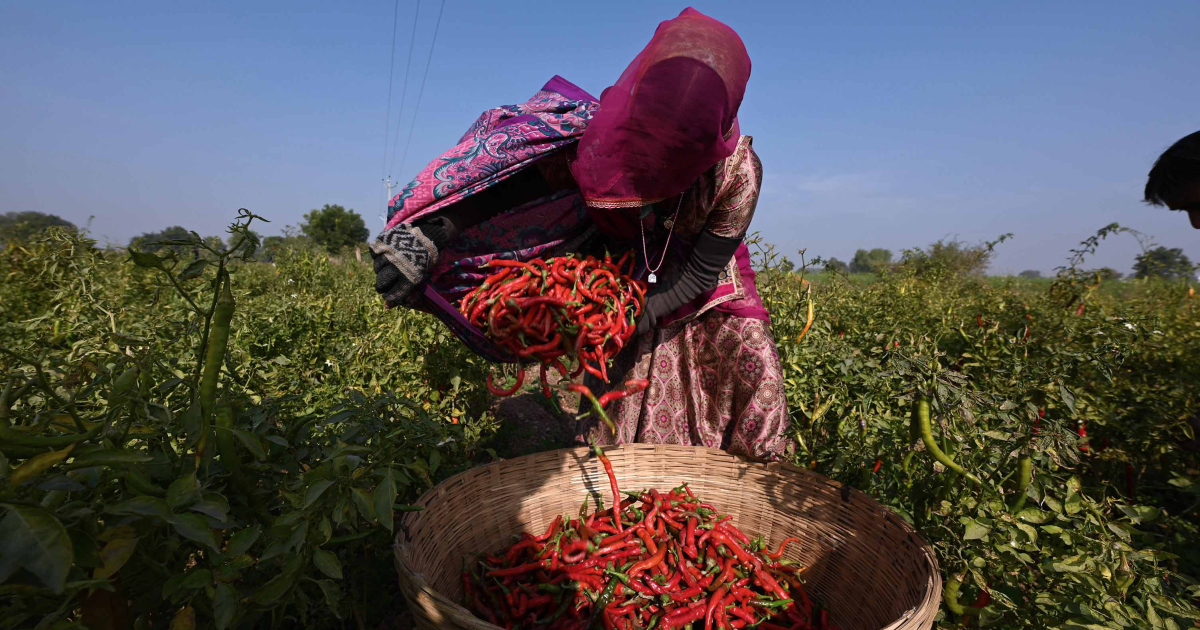
The rapid expansion of Farmer Producer Organisations (FPOs) across India has successfully institutionalised collective bargaining frameworks for small and marginal smallholders. However, this macro-level aggregation has not uniformly translated into financially viable, self-sustaining farmer-owned enterprises.
Despite institutional promotion, primary FPOs and secondary cluster federations operate below their commercial potential due to systemic operational bottlenecks. Key systemic deficits include:
Consequently, a critical gap persists: the ecosystem lacks a validated, operational model that transforms geographic clusters into integrated, market-responsive corporate structures.

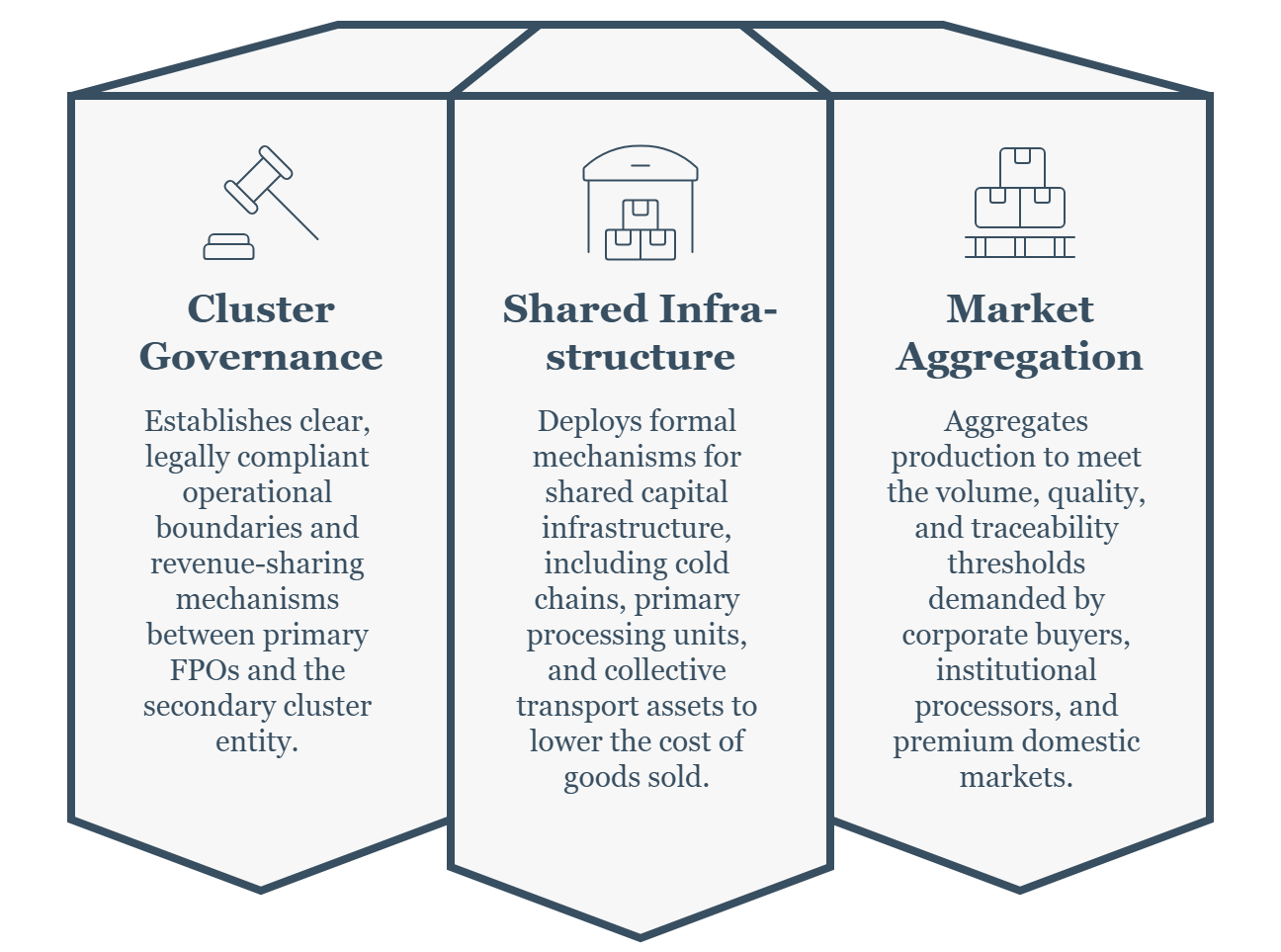
To bridge this structural gap, Centre for Digital Financial Inclusion (CDFI) proposes to design, deploy, and validate a replicable FPO Cluster Operating and Business Model. The strategy focuses on three core pillars:
Rather than imposing a pre-determined institutional structure, CDFI will deploy an agile, evidence-driven “Business-First, Structure-Late” methodology. The core premise is that institutional integration must follow, not precede, demonstrated commercial viability. By first proving that collaborative operations generate higher net margins than isolated activities, the project will naturally incentivise participating FPOs to transition towards a formalised corporate ecosystem.
During the initial phase, a curated cohort of individual FPOs will form an informal cluster alliance. Each participating organisation will retain its independent corporate identity, equity structure, and board-level decision-making autonomy. This risk-mitigated environment allows them to explore economies of scale, aggregate crop volumes and co-invest in market testing without premature legal or administrative friction.
This operational evolutionary pathway transitions standalone FPOs into an integrated, self-sustaining collective enterprise through a structured, seven-step sequence:
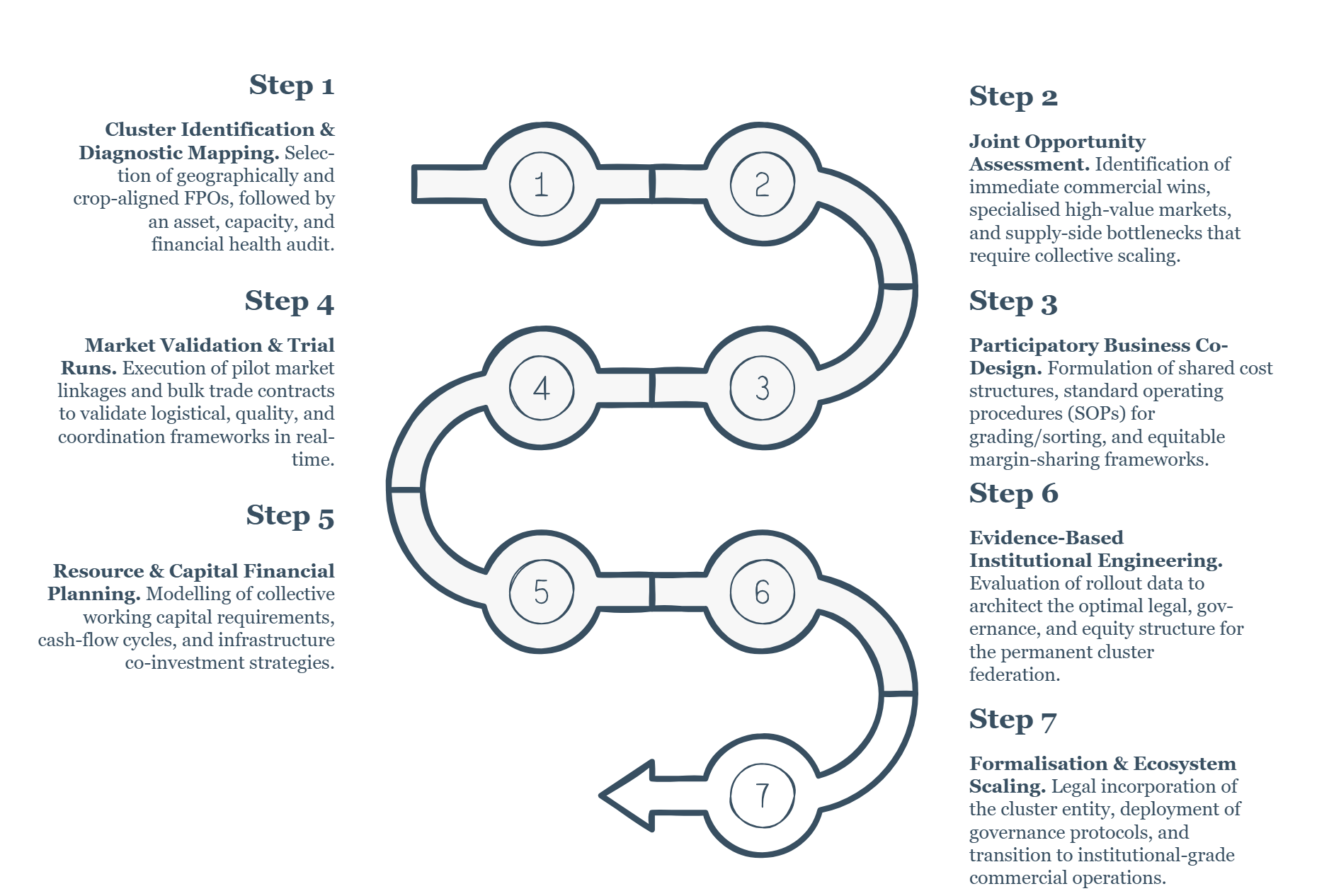
By rooting institutional design in empirical field data rather than administrative assumptions, this framework ensures that the resulting secondary federation is structurally optimised to sustain, and scale the collective agribusiness.
